
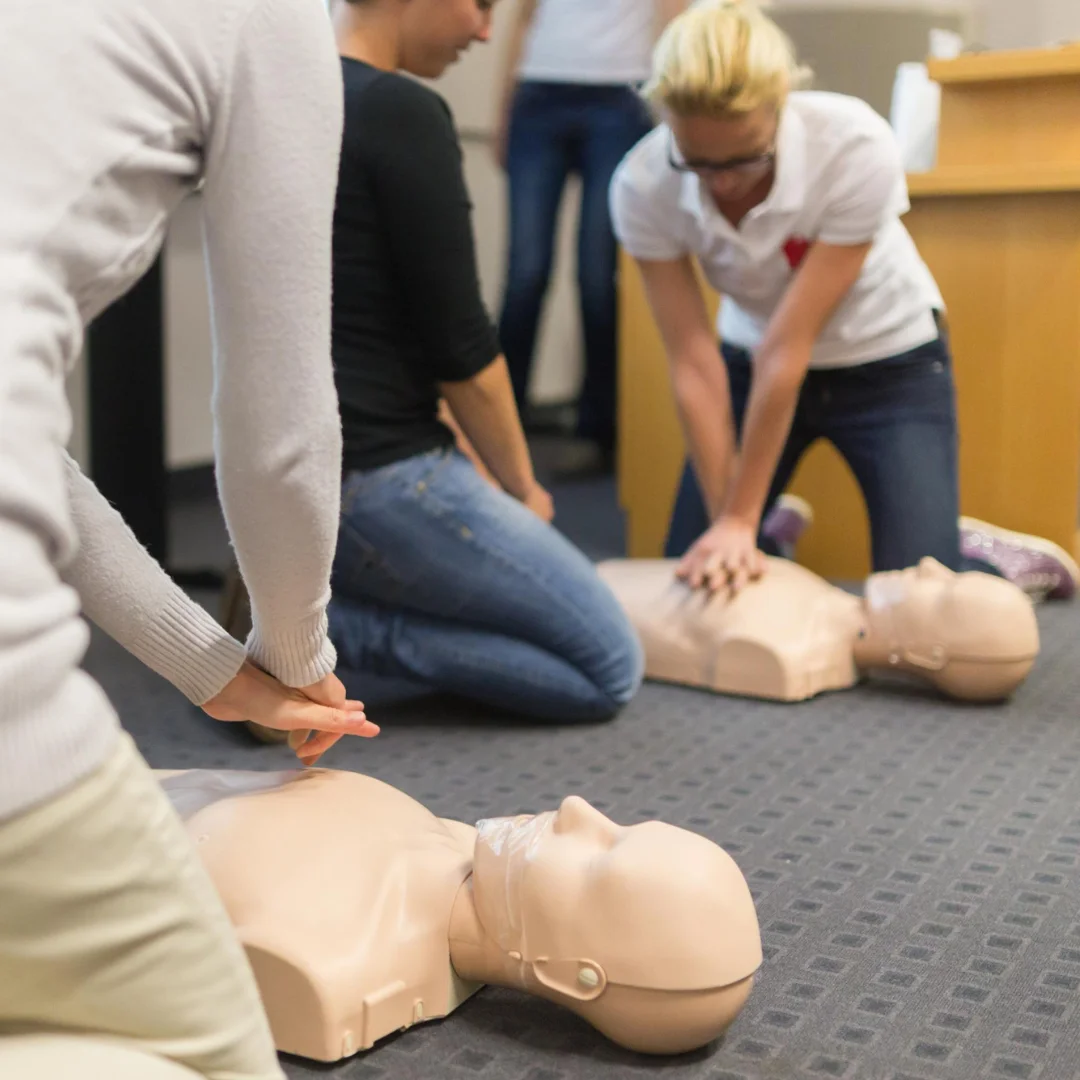
Our Basic Life Support training in London helps you gain the skills and confidence to handle life-threatening emergencies. This course uses practical, classroom sessions to teach you essential CPR techniques, safe AED usage, and clear emergency response steps according to UK guidelines.
This course is for healthcare professionals, support staff, workplace responders, and anyone in London and Greater London. It emphasises calm decision-making, correct techniques, and quick actions when every second counts.
What to Expect:
Whether you are refreshing your skills or learning for the first time, our Basic Life Support training ensures you are prepared for real emergencies.
Book Your Course
Group & Organisation Enquiries
What Is Basic Life Support
Basic Life Support (BLS) is the immediate care given to someone facing a medical emergency like cardiac arrest, breathing problems, or choking. In the UK, BLS emphasises recognising emergencies early, calling for help, performing high-quality CPR, and using an Automated External Defibrillator (AED) as soon as possible.
BLS training follows guidelines from the Resuscitation Council UK. It is essential for effective emergency responses in healthcare, social care, and workplaces. Our basic life support training course in London teaches these key principles in a clear and calm manner, helping learners understand what to do and why it matters.
The main goal of a basic life support course in London is to save lives until advanced medical help arrives. It gives learners the confidence to act quickly, correctly, and safely during critical emergencies.
Basic Life Support (BLS) is needed when someone is unresponsive, not breathing normally, or facing a life-threatening emergency. These situations can happen suddenly, whether at home, in workplaces, or in public areas.
BLS skills are crucial in situations like:
In busy areas like London, quick BLS training can change outcomes between life and death. Knowing how to act in the first few minutes can help stabilise a person and improve chances of survival.
This is why people often search for BLS training nearby. They understand that having trained responders available is essential, not optional.
Basic Life Support (BLS) training is crucial for healthcare professionals in London and Greater London. Doctors, nurses, assistants, and support staff are often the first to help patients who collapse or are unresponsive, whether in medical facilities or public places.
Our BLS course in London helps these professionals by teaching:
This training is ideal for GP practises, dental clinics, pharmacies, outpatient centres, and private healthcare providers that need to keep staff updated on lifesaving skills according to UK standards.
Care homes, supported living services, and social care settings need staff who can react calmly and correctly during medical emergencies. Residents are often older, vulnerable, or have long-term health issues, making emergencies like cardiac arrest or choking more likely.
Our basic life support training in London is important for:
The course focuses on practical decision-making, safe handling of emergencies, early intervention, dignity, and infection control. Completing a recognised basic life support certification in London helps care providers meet training standards and improve emergency readiness.
Basic Life Support (BLS) skills are important beyond healthcare settings. Cardiac arrests and medical emergencies often happen in offices, shops, gyms, transport hubs, and public places in London. Trained workplace responders and informed bystanders are crucial in the critical first minutes.
This BLS course in Greater London is for:
For those looking for basic life support training, this London CPR and AED course offers practical instruction, helping people act confidently and effectively during emergencies.
When someone has a sudden cardiac arrest, every second counts. If oxygen isn’t getting to the brain, damage can start within minutes. That’s why quick Basic Life Support (BLS) is essential for survival.
Effective BLS training in London emphasises recognising cardiac arrest, taking quick action, and using the right techniques. Good CPR keeps blood flowing to the brain and other vital organs until advanced medical help arrives. Using an AED early can restart a normal heartbeat and greatly improve the chances of survival.
Many cardiac arrests in London happen in places like workplaces, care facilities, homes, and public areas. Trained bystanders and workplace responders are often the first to act in these critical moments. This is why taking a BLS course in London can save lives.
In an emergency, hesitation wastes time. BLS training in London gives people the confidence to act quickly, follow important steps, and provide effective care under pressure.
Basic Life Support ensures a quick response by:
Knowing what to do removes panic, allowing for calm action. In healthcare settings, care homes, workplaces, or public areas, trained responders can stabilise a casualty during critical moments.
That’s why organisations in London invest in BLS training, and why people looking for basic life support recognise its importance. A quick, confident response can be the key to survival.
The Key Stages of the Chain of Survival
The Chain of Survival is a series of important actions that increase the chance of survival after cardiac arrest. It guides basic life support training in London and helps people respond to emergencies effectively.
The key steps in the Chain of Survival are:
Each step is crucial. A delay or mistake at any point can lower the chances of survival. This is why BLS training in London emphasises the importance of speed, accuracy, and confidence in the first moments after an emergency.
As a trained first responder, you play a key role in the Chain of Survival. You may often be the first person to arrive in various places in London, like workplaces, care settings, or public areas.
Your main responsibilities include:
Completing a basic life support course in London will help you understand these duties and perform them calmly under stress. This training gives you the confidence to take action quickly when every second matters.
Recognising cardiac arrest quickly and accurately is the first crucial step in effective basic life support (BLS) training in London. Cardiac arrest happens when the heart stops pumping blood, causing a person to collapse and become unresponsive.
In this BLS course, learners are taught to spot key signs right away, such as:
It’s important to know the difference between normal breathing and ineffective breathing. Agonal gasps might look like breathing but actually mean cardiac arrest and need immediate action. This skill is a key part of BLS training in London because delays here can lower survival chances.
In busy places across London, clear assessments help first responders act quickly and start lifesaving care without hesitation.
Once cardiac arrest is recognised, quick and organised action is crucial. People often search for basic life support guidance, and this course provides clear steps through hands-on practise.
In a cardiac arrest emergency, the immediate priorities are:
In this London CPR and AED training course, learners are taught to stay calm, follow a clear sequence, and provide care until professionals arrive. The focus is on keeping blood flow, reducing delays, and helping the person through the critical emergency phase.
These initial actions lay the groundwork for an effective emergency response and are emphasised throughout the basic life support certification program in London to build confidence and readiness for real-life situations.
Correct CPR Technique and Compression Depth
Once cardiac arrest is recognised, quick and organised action is crucial. People often search for basic life support guidance, and this course provides clear steps through hands-on practise.
In a cardiac arrest emergency, the immediate priorities are:
In this London CPR and AED training course, learners are taught to stay calm, follow a clear sequence, and provide care until professionals arrive. The focus is on keeping blood flow, reducing delays, and helping the person through the critical emergency phase.
These initial actions lay the groundwork for an effective emergency response and are emphasised throughout the basic life support certification program in London to build confidence and readiness for real-life situations.
The course teaches breathing support along with chest compressions in adult CPR. Learners will understand when and how to give rescue breaths safely. This part of the BLS training in London focuses on the safety of both the person in need and the responder.
Learners will learn to:
Safety is a top priority in the basic life support certification in London. Learners are trained to act confidently while protecting themselves, following the latest guidelines for infection control.
By the end of this section, participants will know how to perform adult CPR correctly, safely, and calmly, setting a strong foundation for effective emergency response in London.
What an AED Is and How It Works
An Automated External Defibrillator (AED) is a portable device that checks the heart’s rhythm and can deliver an electric shock to restart a normal heartbeat during sudden cardiac arrest. You can find AEDs in many places throughout London, including workplaces, hospitals, transport hubs, gyms, and public areas.
In our basic life support training in London, learners will understand:
AEDs are easy to use and give clear voice and visual instructions. This basic life support course in London teaches exactly how the device aids lifesaving efforts in emergencies.
Knowing how to use an AED safely is as important as knowing when to use it. In this BLS training in London, learners practise using an AED in a supportive setting, building confidence for real-life situations.
The course includes:
Safety is a main focus throughout the CPR and AED training in London. Learners learn to protect themselves, the casualty, and bystanders while giving timely defibrillation.
By completing this basic life support certification in London, participants gain the skills to find, use, and apply an AED correctly, playing a crucial role in the Chain of Survival when every second matters.
Assessing Responsiveness and Breathing
Managing an unconscious person is a key part of basic life support (BLS) training in London. Accurate assessment helps first responders determine if immediate action is needed and allows for a quick and proper response.
In this BLS course, learners will:
Understanding breathing patterns is very important. An unconscious person who isn’t breathing normally should always be treated as if they are in cardiac arrest. This assessment is practised many times during BLS training in London to help build confidence and accuracy for real-life situations.
Knowing when to start CPR is crucial; it saves time and lives. This course gives clear instructions on when to use CPR and encourages quick action.
Participants learn to start CPR right away if:
Waiting to start CPR can lower the chances of survival. This basic life support certification in London stresses the importance of acting quickly when unsure, following official UK guidelines.
Through hands-on training and real-life scenarios, learners build confidence to make quick choices, begin CPR without hesitation, and keep helping until professional help arrives. This method prepares them to handle unconscious individuals safely and efficiently in any setting in London.
Placing a Casualty in the Recovery Position
The recovery position is for someone who is unconscious but breathing normally. It keeps their airway open and lowers the chance of blockage while waiting for emergency services. Proper positioning is an important skill taught in our basic life support training in London.
In this course, learners are guided on how to:
Using the recovery position correctly is crucial in workplaces, care settings, and public areas in London, where trained responders might need to assist someone for a few minutes before professionals arrive.
The course focuses on calm movements and clear communication, ensuring the person receives dignified and safe care at all times.
Putting someone in the recovery position is just the first step. First responders must keep monitoring the person as part of their basic life support (BLS) training in London.
Learners will:
This BLS certification in London teaches that conditions can change quickly. Staying alert and ready to help ensure the best care for the person in need.
By learning recovery position techniques and how to monitor effectively, participants gain the confidence to handle unconscious individuals safely in any emergency in London.
Choking Response for Conscious Casualties
Choking is a serious emergency that needs quick action. In our basic life support training in London, students learn to spot choking early and respond based on the person’s condition.
For a conscious adult who is choking, the course teaches how to:
This basic life support course in London focuses on making clear decisions and using the right techniques to reduce harm and restore airflow quickly. Hands-on demonstrations and supervised practise help learners in London and Greater London act confidently and calmly.
If someone chokes and becomes unresponsive, it’s a serious situation. BLS training in London shows how to respond safely when choking leads to unconsciousness.
Learners will:
The course emphasises that CPR is the main focus when an unconscious person isn’t breathing normally. These steps are practised in basic life support certification in London to ensure learners feel confident in handling emergencies.
By knowing how to respond to both conscious and unconscious choking incidents, participants can better protect lives in workplaces, care facilities, healthcare settings, and public spaces across London.
Reducing Risk of Infection
Infection control is key during emergency responses. Our basic life support training in London teaches how to provide care while lowering the risk of infection for both the helper and the victim.
In this course, participants learn:
The course offers practical guidance for real situations in London and its surrounding areas, where access to protective gear can vary. Learners are encouraged to act confidently while taking sensible precautions for safe care.
Personal safety is crucial in emergencies. BLS training in London stresses that responders should avoid unnecessary risks while helping others.
Here are some key safety principles:
The basic life support certification in London teaches that effective emergency response combines lifesaving actions with personal safety. By learning how to manage infection risks and stay safe, trainees are better equipped to respond calmly in various situations.
These skills are vital for healthcare workers, care staff, workplace responders, and anyone seeking practical basic life support training nearby.
Hands-on CPR and AED practise
This basic life support training course in London focuses on hands-on learning to build real-world skills. Participants practise CPR and AED skills in a classroom set up to mimic emergency situations.
During the course, participants will:
This hands-on approach ensures learners are ready to act. Regular practise helps solidify the correct techniques, making responses more natural and effective during real emergencies in London and Greater London.
In an emergency, it’s just as important to know what to do as when to do it. BLS training in London teaches clear decision-making skills, helping responders quickly assess situations and act without hesitation.
Learners will gain the ability to:
Guided scenarios and discussions reinforce these skills, helping learners prioritise and avoid common mistakes. By the end of the basic life support certification in London, participants will have the practical skills and confidence to respond effectively in healthcare, care, workplace, and public settings.
Alignment with UK Clinical Guidance
This basic life support training course in London follows national clinical guidelines to provide learners with accurate and safe instructions. The course content is based on best practises from the Resuscitation Council UK, which sets the standard for CPR, AED use, and emergency responses in the UK.
During the course, learners practise techniques and decision-making skills that are evidence-based and accepted in healthcare and workplaces. This ensures:
For organisations and individuals in London and Greater London, this alignment assures that the training meets national standards and supports effective emergency care.
Maintaining professional standards is crucial for anyone responding to medical emergencies. BLS training in London emphasises the need for skill, confidence, and responsibility in lifesaving care.
The course promotes professional standards by focusing on:
Whether you’re a healthcare worker, care assistant, workplace responder, or a member of the public, completing a recognised basic life support course in London shows your commitment to safety and preparedness.
By following UK best practises and maintaining high standards, learners can better support others in emergencies and improve emergency response throughout London.
Course Structure and Duration
The basic life support training course in London is a structured classroom program. It focuses on hands-on learning while being suitable for busy people. The course combines clear teaching with practical exercises so that learners grasp both lifesaving theory and practise.
The course typically covers:
The course is short, making it ideal for healthcare workers, care staff, workplace responders, and anyone in London and Greater London who needs effective training without missing too much work.
The BLS training course in London focuses on practical skills instead of exams. The goal is to help learners perform essential skills correctly and confidently in real-life situations.
Participants benefit from:
Experienced UK-qualified instructors support learners throughout the course, helping them build confidence and correct techniques in a calm environment. Completing the course earns a recognised basic life support certification in London, showing that the learner can provide effective emergency care according to UK standards.
This structured, instructor-led approach ensures that every participant is ready to respond competently and responsibly in an emergency.
Confidence to Respond in Life-Threatening Emergencies
Completing basic life support training in London builds confidence. Emergencies are unpredictable and stressful, so acting quickly is crucial. This course provides clear knowledge and practical skills to help learners respond correctly.
By finishing this course, participants gain:
This confidence is essential for healthcare workers, care staff, workplace responders, and the public in London and Greater London, so they can step in when help is needed.
Basic Life Support (BLS) training directly improves safety at work and in the community. More trained people lead to faster and more effective emergency responses.
Benefits for organisations and communities include:
Investing in BLS training shows employers’ commitment to safety and risk management. For individuals, it provides essential lifesaving skills for use at work, home, or in public.
Getting a recognised BLS certification boosts personal skills and overall safety, helping create safer environments across London and Greater London.
Basic Life Support Certificate Recognition
After completing the Basic Life Support training in London, participants receive a recognised certificate that shows they are skilled in adult CPR, using an AED, and emergency response. This certificate meets current UK health standards.
The Basic Life Support certification is useful in many places, including:
The training follows the guidelines from the Resuscitation Council UK, ensuring it meets professional and workplace needs in London and Greater London.
Basic Life Support (BLS) skills can fade over time, so regular refresher training is important. In London, a BLS certificate is valid for 12 months, which aligns with UK guidelines for keeping skills sharp and confidence high.
Refresher training helps learners to:
Many organisations in London offer annual BLS refreshers to keep staff prepared and compliant. People looking for BLS training nearby can also take refresher courses to keep their lifesaving skills fresh and reliable.
Having a valid certification ensures you are always ready to respond safely and effectively in emergencies.
On-site and Group Training Across London
First Aid at Work Training offers flexible basic life support training in London for organisations that want to train many staff members effectively. On-site and group training lets teams learn together in their usual setting, boosting their confidence and readiness for emergencies.
Our BLS training in London is ideal for:
We provide basic life support sessions across London and Greater London, helping organisations meet training needs while keeping daily operations running smoothly.
We know that workplaces and care environments have time, staffing, and operational challenges. That’s why our basic life support training in London is flexible and practical.
We offer delivery options like:
Our training is led by experienced UK-qualified instructors familiar with healthcare and workplace realities. This ensures our basic life support certification is relevant to the situations your staff will face.
For organisations looking for basic life support nearby, our group and on-site training is a cost-effective way to enhance lifesaving skills and improve safety culture.
Secure Your Place on an Upcoming Course
If you need reliable basic life support training in London, book now. Our in-person courses are taught by experienced UK instructors and focus on practical CPR, AED use, and emergency response skills.
When you book our basic life support course, you’ll get:
Spaces are limited to keep training effective, so we recommend booking early if you’re in London or Greater London.
Group training helps organisations build lifesaving skills across teams. First Aid at Work Training offers flexible Basic Life Support (BLS) options in London that fit your workplace needs.
Group training is great for:
Whether you need training at your location or planned group sessions, our BLS options in Greater London are designed to meet your needs while keeping high teaching standards.
Group and Organisation Enquiries
Enhance your emergency preparedness. Book your course or ask for more details today, so you and your team are ready to respond when it counts.
£50.00


Reviews
There are no reviews yet.