
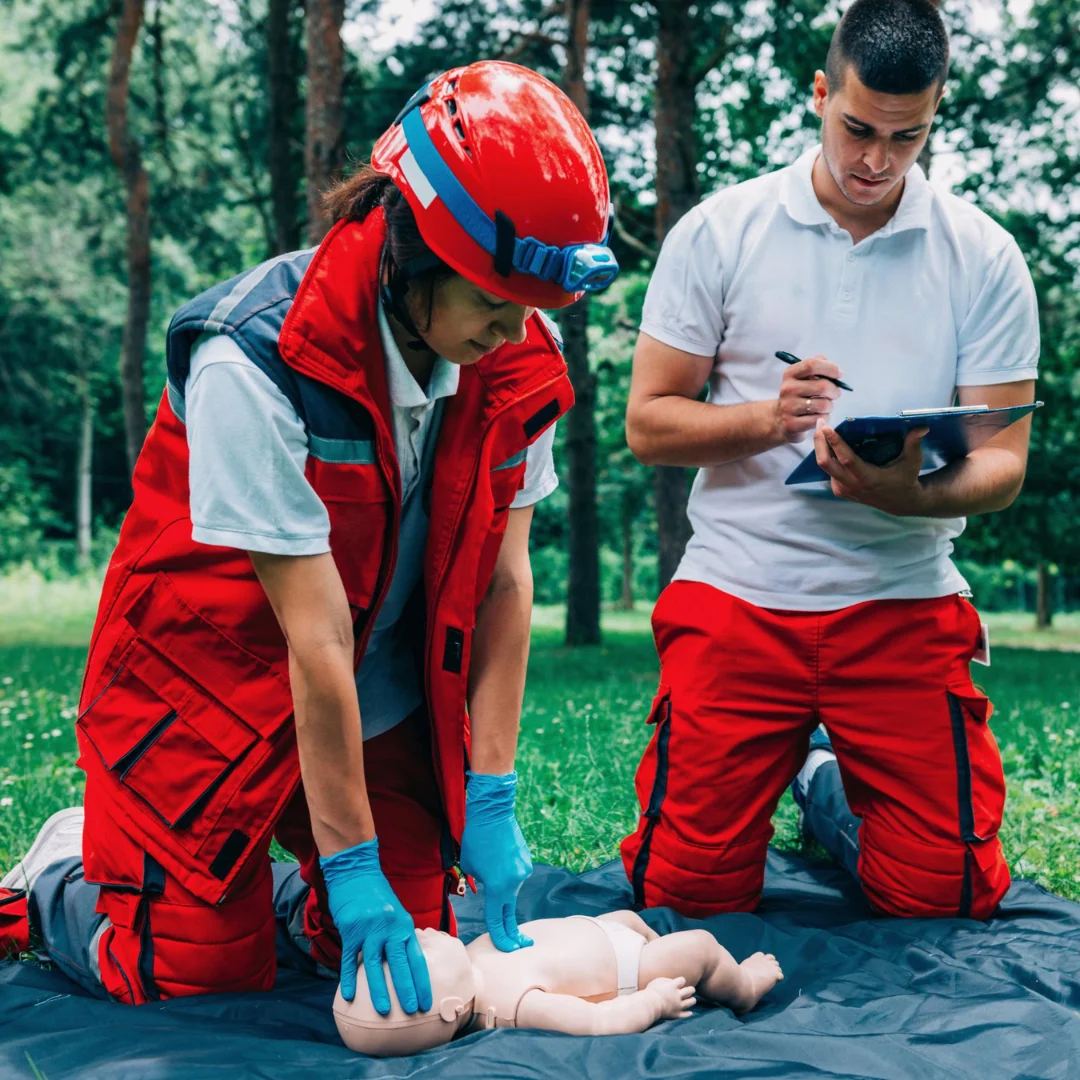
Our Paediatric First Aid Course in London offers hands-on training for anyone who cares for babies and children. Taught by experienced UK instructors, this course helps you gain the skills and confidence needed to handle childhood emergencies calmly.
The training meets EYFS and Ofsted standards and is perfect for individuals and organisations throughout London and Greater London. Whether you work in a nursery, school, or early years setting, or you’re a parent or carer needing recognised certification, this course prepares you to act in crucial situations.
You’ll Practise in small groups and receive clear guidance on real-life childcare scenarios. Our London courses are easy to access, with flexible options for individual and group training.
Paediatric first aid helps caregivers provide immediate care to infants and children during emergencies and other situations. It is aimed at people who look after or supervise kids and babies, focusing on their specific medical, physical, and emotional needs.
In the UK, paediatric first aid training is legally required for many childcare jobs, especially in settings that follow the Early Years Foundation Stage (EYFS).
Paediatric first aid is about helping babies and children with injuries and illnesses until medical help arrives.
UK paediatric first aid training teaches learners to:
Unlike regular first aid courses, paediatric first aid focuses on risks and common accidents that affect children. This training is crucial for nurseries, schools, childminders, nannies, and anyone caring for children.
Children are not just small adults, so first aid must be adjusted for their size and growth. Paediatric first aid differs from adult first aid in important ways:
Training also emphasises:
Because of these differences, adult first aid training isn’t enough for those working with children. A recognised Paediatric first aid course in London prepares first aiders to respond safely and confidently to babies and children.
Paediatric first aid training is required for many childcare jobs in the UK. This training helps protect children’s health and safety in early years and educational settings.
In London, childcare providers must have trained staff to follow the law, ensure safety, and keep their registration with regulatory bodies.
The Early Years Foundation Stage (EYFS) outlines clear rules for first aid training in early childhood settings.
According to EYFS:
EYFS highlights the importance of childcare professionals being ready to handle emergencies like choking, cardiac arrest, severe bleeding, or sudden illness.
For nurseries, preschools, and childminders in London, completing an approved paediatric first aid course is vital for meeting EYFS requirements and ensuring child safety.
Ofsted inspectors check if childcare providers take proper steps to protect children. Paediatric first aid training is important for this evaluation.
During inspections, Ofsted looks for:
Not meeting Ofsted’s first aid standards can result in:
By completing paediatric first aid training in London with a reliable provider, childcare organisations can show they follow regulations, act professionally, and prioritise children’s safety and well-being.
Paediatric first aid training in London is important for anyone caring for babies and young children. Laws and safety standards require that trained first aiders be present in childcare settings.
This course is suitable for both childcare professionals and individuals throughout London and Greater London.
Paediatric first aid training is required for many jobs in the early years and childcare. This includes:
In London, paediatric first aid certification is crucial for nurseries and early years providers to meet EYFS and Ofsted standards and show a strong commitment to safety.
Taking a recognised paediatric first aid course in London helps staff confidently handle emergencies with infants and children, ensuring safety for both the children and the organisation.
Childminders, nannies, and professional carers are responsible for keeping children safe. They often work alone or in home settings.
Paediatric first aid training is crucial for:
In many situations, having a valid paediatric first aid certificate is required for registration and professional Practise. This training ensures that carers can handle emergencies like choking, unconsciousness, injuries, and sudden illnesses while caring for children at home or in clients’ homes across London.
Paediatric first aid training is not just for professionals. Many parents and family members in London take this course to better protect their children.
This course is perfect for:
Learning paediatric first aid helps parents and carers act quickly and calmly during emergencies, whether at home, in public, or while travelling. For many families in London, this training offers peace of mind and important skills that could save a child’s life in an emergency.
Paediatric first aid is tailored for babies and children. Although some first aid principles apply to everyone, emergencies can look different for kids and adults, and the first aid methods can also vary. Knowing these differences is important for anyone taking care of young children in London.
Babies and children are different from adults, which affects how first aid should be given. Key differences include:
Since children can get worse quickly, Paediatric first aid training focuses on recognising problems early and acting quickly. Techniques like CPR, recovery position, and bleeding control are adjusted for a child’s age, size, and development. This helps ensure that first aid is safe and effective without causing more harm.
When responding to emergencies for children or infants, the approach is different from that for adults.
Paediatric first aid focuses on:
Training also teaches when to call emergency services, knowing that children may struggle to explain their symptoms.
Regular adult first aid training does not cover these child-specific needs well enough. A recognised Paediatric first aid course in London prepares learners to respond confidently and correctly when a baby or child is hurt or sick.
Paediatric first aid training in London teaches people how to handle various emergencies with babies and children. The course covers both serious situations and common issues that can happen in nurseries, schools, childcare centres, and at home.
The training uses real-life scenarios and hands-on Practise, helping learners spot emergencies quickly and take the right steps while waiting for medical help.
In the Paediatric first aid course, you will learn how to handle emergencies that require quick action to protect a child’s life.
You will cover important topics like:
The course also addresses common childhood incidents, helping learners recognise when to seek urgent medical help.
By completing Paediatric first aid training in London, you will gain the confidence to act quickly and correctly in situations where a delay or mistake could be dangerous.
Children can have emergencies anywhere. This course prepares learners for real-life situations where they might use their skills.
Training focuses on places like:
Learners Practise responding to emergencies such as:
This paediatric first aid course in London covers both professional childcare settings and home environments, helping learners respond calmly and effectively whenever a child needs help.
Cardiopulmonary resuscitation (CPR) is a vital skill taught in Paediatric first aid courses in London. Since babies and children have different bodies than adults, CPR techniques must be adjusted for their age and size. This training helps learners respond quickly and correctly if a baby or child stops breathing or their heart stops.
Infant CPR is for babies under one year old. It uses gentle techniques to keep blood and oxygen flowing without causing harm.
In paediatric first aid training in London, learners are taught to:
The training also teaches how to spot early signs of breathing trouble in infants, as quick action can prevent cardiac arrest.
Practising on infant manikins helps learners gain confidence and muscle memory, so they can respond calmly in a real emergency with a baby.
Child CPR is for kids aged one to puberty and is different from infant CPR in technique and strength.
Learners will be trained to:
Safety is a key focus in training. Learners will learn to:
Completing infant and child CPR training in a recognised paediatric first aid course in London gives learners the confidence and skills to handle serious emergencies involving children.
Choking is a common and serious emergency for babies and young children. Their small airways, developing swallowing skills, and habit of exploring with their mouths put them at higher risk.
Paediatric first aid training in London teaches simple, age-appropriate responses to choking. This training helps learners respond quickly and safely if a child’s airway gets blocked.
Choking in infants needs a careful and precise method to clear the airway without causing harm.
In a Paediatric first aid course, learners will:
The training stresses never to use abdominal thrusts on infants, as this can cause serious injuries.
Practical sessions let learners Practise choking techniques on manikins, helping them gain confidence and skills for real-life situations.
Children over one year old need a different approach to choking response because of their size and strength.
Learners will be trained to:
The course also covers common choking hazards at home and in childcare, like food, toys, and small objects.
By completing Paediatric first aid training in London, learners gain essential skills to handle choking emergencies in both babies and children, helping prevent serious situations from getting worse.
Managing Unconscious Children and Recovery Position
An unconscious child needs quick and calm action. Paediatric first aid training in London teaches how to quickly check a child, keep their airway clear, and minimise harm while waiting for emergency help.
This part of the course emphasises safe assessment, ongoing monitoring, and proper positioning.
When a child is unresponsive, the first step is to quickly assess their condition.
Learners are trained to:
If a child is not breathing normally, learners start CPR immediately. If the child is breathing but unconscious, it’s important to position them correctly to protect their airway and prevent choking.
Training focuses on staying calm, acting quickly, and monitoring the child until professional help arrives.
The recovery position keeps the airway open and lets fluids drain from the mouth, which lowers the risk of choking.
In the paediatric first aid course in London, learners Practise how to:
Learning to manage unconscious children and use the recovery position correctly equips learners with important skills that protect a child’s airway and provide crucial time until help arrives.
Severe bleeding and shock are serious emergencies for babies and children. Paediatric first aid training in London teaches people how to act quickly, stop bleeding, and support a child until help arrives.
The course emphasises making calm decisions, safe actions, and keeping a close watch on the child.
Children can quickly lose blood, and even small wounds can become serious if not treated properly.
In the Paediatric first aid course, learners will:
The training covers bleeding from cuts, punctures, falls, and common accidents in childcare and home settings. Learners Practise techniques in a safe environment to build confidence and ensure they can respond effectively if a child is bleeding heavily.
Shock happens when the body doesn’t get enough blood or oxygen. This can follow serious bleeding, burns, injuries, or sudden illnesses. Children are especially at risk and can get worse quickly.
Paediatric first aid training in London teaches how to spot early signs of shock, such as:
Learners are trained to handle shock by:
By learning to control severe bleeding and manage shock, learners gain vital skills that can prevent a child’s condition from getting worse and ensure their safety until medical help arrives.
Burns, scalds, fractures, and head injuries are among the most common accidents affecting babies and children, particularly in childcare settings and the home. Paediatric first aid training in London equips learners with clear, age-appropriate techniques to reduce injury severity, ease pain, and recognise when urgent medical attention is required.
Burns and scalds can happen during everyday activities like meals, play, or baths. Quick and proper first aid can greatly reduce tissue damage and scars.
In the Paediatric first aid course, learners will:
The training also addresses scalds from hot liquids, steam, and food, which are common in young children.
Falls and collisions often cause injuries in babies and young children. While most bumps are minor, some injuries need careful checks and further action.
Paediatric first aid training in London teaches learners how to:
The training focuses on head injuries since children may not express their pain clearly. Learners learn to observe carefully and act cautiously to protect the child’s health.
This first aid course covers burns, scalds, fractures, and head injuries, ensuring learners can handle common childhood accidents calmly and reassuringly.
Medical emergencies in children can happen quickly and cause stress. Paediatric first aid training in London teaches people how to respond calmly and safely to seizures, allergic reactions, and other common medical issues in childcare and home settings.
The training emphasises keeping the child safe, avoiding more harm, and knowing when to call emergency services.
Seizures can be scary, especially the first time someone has one. Febrile seizures are common in young kids and usually happen when their body temperature rises quickly. Epileptic seizures can also affect children with a diagnosis.
In a Paediatric first aid course, learners will:
The training also explains when seizures are emergencies, such as if they last too long, happen repeatedly, or cause breathing problems afterwards.
Allergic reactions in children can be mild or severe. Anaphylaxis is a serious reaction that needs quick action.
Paediatric first aid training in London helps learners spot early warning signs, such as:
Learners are trained to:
This paediatric first aid course covers seizures, allergic reactions, and anaphylaxis, ensuring that learners can handle serious medical emergencies while keeping the child’s safety and wellbeing in mind.
Paediatric first aid training in London is hands-on and practical. It teaches skills for responding to emergencies that you can use right away in childcare and home situations. The course helps boost your confidence through Practise with skilled UK trainers. This method ensures that you not only learn but are also ready to act quickly in a child’s emergency.
In the paediatric first aid course, students Practise important skills with realistic scenarios and professional equipment.
Skills covered include:
Small group sessions provide individual guidance and feedback, helping students improve their techniques and gain confidence. By the end of the course, students can perform these skills calmly and correctly, even under pressure.
Effective first aid involves more than just knowing what to do. Paediatric first aid training in London teaches decision-making and incident management, which are essential for keeping children safe.
Learners will learn how to:
This structured training helps learners handle incidents confidently and professionally, ensuring children receive proper care while following safety and organisational guidelines.
Paediatric first aid training in the UK must follow clear rules. Childcare providers and professionals in London need to complete a course that meets these standards to protect children, keep their registration, and pass inspections confidently.
This paediatric first aid course in London meets EYFS requirements and Ofsted expectations, guaranteeing that learners receive proper and recognised training.
The Early Years Foundation Stage (EYFS) lays out the rules for early childhood care in England, including first aid requirements for registered providers.
To meet the first aid rules for childcare:
This paediatric first aid training in London is designed to help childcare professionals meet these requirements, ensuring they comply with the law and follow best Practises.
Ofsted inspectors want paediatric first aid training to be relevant and current. Certification must show that learners can handle emergencies with babies and young children.
Key training standards include:
By taking this paediatric first aid course in London, learners and organisations can prove they meet EYFS safeguarding standards, follow Ofsted guidelines, and promote a strong culture of child safety and professionalism.
Our paediatric first aid course in London is clear, practical, and easy to access for individuals and organisations. It combines important knowledge with hands-on Practise, so learners feel confident and ready to handle emergencies involving babies and children.
The course meets EYFS and Ofsted requirements, making it convenient for childcare professionals, parents, and carers in London and Greater London.
The paediatric first aid course mixes theory with hands-on Practise.
Here are the main features:
The course lasts long enough to earn a recognised paediatric first aid certification, making it ideal for:
Groups can also train together, with options for on-site training throughout London.
Learning happens in a friendly classroom that focuses on practical skills. During the course, learners will:
Practical assessments ensure that learners can:
This hands-on approach makes paediatric first aid training in London truly effective, preparing learners to act calmly and confidently when a child needs urgent help.
Completing Paediatric first aid training in London offers more than just a certificate. It gives learners the confidence and skills to care for babies and children at home and in professional settings.
For individuals and organisations, the training enhances child safety and ensures compliance, providing peace of mind.
Paediatric first aid training builds confidence for responding to emergencies with children.
After the course, learners can:
This confidence is crucial in stressful situations, where doubt can lead to risks. Paediatric first aid training in London prepares learners to act quickly and correctly when a child’s safety is at risk.
Childcare and education providers need paediatric first aid training to meet legal requirements.
Taking a recognised paediatric first aid course helps with:
For nurseries, schools, and childcare organisations in London, having trained staff shows a commitment to child safety and following regulations.
Investing in paediatric first aid training protects children, boosts staff confidence, and ensures safe and responsible operations.
Taking a recognised paediatric first aid course in London gives learners a certificate showing they can handle emergencies with babies and children safely. This certification is important for childcare jobs and assures parents, employers, and inspectors.
After finishing the course, learners get a UK-recognised paediatric first aid certificate. This certificate shows they have met current childcare first aid standards.
The certification is accepted by:
Having a valid paediatric first aid certificate helps with safeguarding duties and proves the learner can handle infant and child emergencies safely and effectively.
Paediatric first aid certificates last for three years. To meet childcare rules and inspections, training must be renewed before the certificate runs out.
Renewal is important to:
Childcare providers in London should track certificate expiry dates and plan refresher training to ensure safety and compliance.
By regularly completing paediatric first aid training, individuals and organisations stay prepared and confident in caring for babies and children.
Paediatric first aid training is crucial for childcare organisations in London. It helps meet legal rules, keep children safe, and stay ready for inspections. Our training is practical, compliant, and easy to use for teams of all sizes.
We collaborate with childcare providers to create training that meets their specific needs while ensuring the highest safety standards.
We provide on-site Paediatric first aid training in London and Greater London, letting nurseries and organisations train their staff where they work.
This option is great for:
On-site group training helps organisations:
Experienced UK-qualified trainers lead our sessions, which meet EYFS and childcare first aid requirements.
Childcare settings have busy schedules and staff limits. That’s why our paediatric first aid training in London offers flexible scheduling to meet your needs.
We offer:
This flexibility helps nurseries and childcare organisations stay compliant without disrupting daily operations.
By choosing group paediatric first aid training, childcare organisations in London can ensure their teams are confident, compliant, and ready to handle emergencies with babies and children.
Acting now helps you be ready, compliant, and confident in caring for babies and children. Our Paediatric first aid course in London is trusted by childcare workers, parents, and organisations throughout Greater London for its practical approach and alignment with EYFS and Ofsted standards.
Whether you’re signing up as an individual or planning training for a group, we make the process easy and supportive.
We hold first aid courses for kids in classrooms throughout London. You can easily find a date and place that works for you.
Booking your place allows you to:
Places are limited to maintain small group learning, so early booking is recommended.
Book Your Paediatric First Aid Course in London
We provide group and on-site Paediatric first aid training for nurseries, schools, and childcare organisations across London.
Group bookings are perfect for:
We will help you create a training schedule that meets your needs while keeping you compliant.
Ask About Paediatric First Aid Training
Contact us today to make sure your staff and children are fully protected with reliable Paediatric first aid training in London.
£80.00

45 reviews for Paediatric First Aid Course in London
Parisa Daryani –
I took the Paediatric First Aid Course in London because I wanted to feel prepared for my own kids at home too.
Ruqayyah Lakhani –
I recommended the Paediatric First Aid Course in London to two friends already because it was genuinely helpful.
Eulalie Morton –
We booked as a group from our nursery after another branch recommended them to us.
Cosette Linton –
Clear instructions and a comfortable learning environment.
Nargis Maredia –
Great course for anyone working with children.
Marcella Winthrop –
I booked the Paediatric First Aid Course in London after starting work at a nursery and honestly it made me feel much more confident around children.
Nerissa Vale –
As a new childminder I was nervous about emergencies, but this course explained everything in a calm and simple way.
Khadija Remzi –
The Paediatric First Aid Course in London helped me finally meet the Ofsted requirements for my new childcare role.
Anwen Cartwright –
I struggled to find a course that felt practical instead of boring theory. This one was very hands on and easy to follow.
Tasneem Gorsi –
We needed urgent first aid training for our preschool staff and this course sorted everything quickly.
Lucinda Marlowe –
The trainer explained choking, CPR, and allergic reactions in a way that actually stayed in my head.
Cyra Dastoor –
My friend recommended this course when I started babysitting and I can see why so many people rate it highly.
Kerensa Blythe –
One of the mums at our nursery suggested the Paediatric First Aid Course in London and it turned out to be such a good decision.
Nausheen Velani –
I booked after hearing positive feedback from another teaching assistant and the training exceeded expectations.
Ismerie Clarke –
A colleague told me this was one of the better first aid courses in London and she was right.
Roksana Jalil –
My sister completed this course before me and said the trainers were excellent, so I signed up too.
Celandine Moore –
I originally joined just for work requirements but ended up learning skills I will use for life.
Solene Mercier –
Lovely trainers and very organised throughout.
Zulekha Jina –
Easy booking process and friendly staff.
Honoria Pike –
Really enjoyed the practical side of the training.
Bushra Dhanani –
Thank you for making everything easy to understand.
Jessalyn Rooke –
Very professional but still relaxed and welcoming.
Tahira Bhojani –
The trainer kept everyone engaged all day.
Elowyn Draper –
After completing the course I feel much calmer dealing with little accidents at work.
Hafsah Peerzada –
I work in a toddler room and this training gave me confidence I was missing before.
Clarimond Hayes –
The practical sessions were brilliant and helped me stop panicking during emergency situations.
Aveline Stratton –
I had done another first aid course years ago but this one was far more useful for childcare settings.
Shazia Muneer –
The Paediatric First Aid Course in London covered real situations we actually face in nurseries.
Maelys Fournier –
I needed a recognised certificate quickly for my childcare application and the process was smooth from start to finish.
Iqra Wali –
Really helpful for parents as well as childcare workers.
Fenella Hastings –
This course made emergency procedures much easier to understand than I expected.
Meher Contractor –
I liked how relaxed the atmosphere was because it made asking questions much easier.
Ondine Barclay –
I almost chose another provider but I am glad I went with this one instead.
Sumayyah Vhora –
My manager suggested this training company and the whole experience felt professional from the start.
Violetta Ames –
I took the course while pregnant and it honestly gave me peace of mind for the future.
Aamira Kermalli –
The Paediatric First Aid Course in London felt very realistic and not rushed like some others I have attended.
Romola Finch –
Everything was explained in simple language.
Loveday Ingram –
I heard about this course through another parent at school and it was definitely worth attending.
Ameera Khumra –
The sessions never felt boring or too long.
Mahnoor Ditta –
Even my husband wants to book after hearing me talk about what I learned.
Delara Sabeti –
Very impressed with the overall quality.
Tazeen Daya –
Good location and helpful customer support.
Eponine Walters –
One of the best training courses I have attended.
Rahima Jaffer –
Thank you for such a useful and enjoyable course.
Morwenna Steele –
Brilliant experience from start to finish.